


The sixth session of the global Dignity by Design course delved into the by turns revelatory and opaque subject of building material supply chains, and their social and environmental repercussions.
Almost half of the world’s extracted resources are used in the built environment.
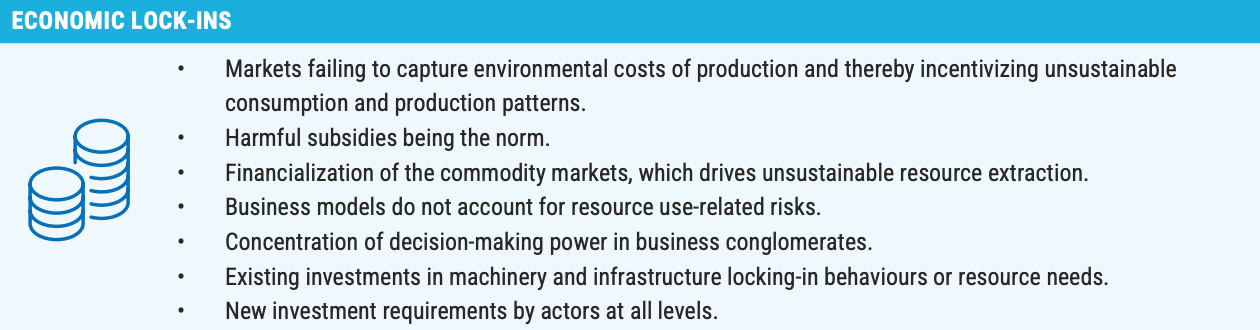
And as a participant from Nepal highlighted, their extraction is inextricably tied up in the dynamics of building as an economic growth machine. From sand, to metals, to bricks, to plastics the main thing that needs to change is the economic structures that underpin what gets built, where and how.
We heard from Monica Mark, the Financial Times’ Southern Africa Bureau Chief. In 2023 Monica wrote a beautifully-reported piece focused on the story of Johannesburg copper gang member Two Six (I’ve highlighted the article before). Economic and social factors meant that copper theft was one of the only avenues open to him to make a living, in turn becoming part of a system of disruption to electricity provision in Johannesburg (Monica’s idea for the story was prompted by blackouts in her neighborhood), and in turn feeding illegally-sourced copper into global commodity trading.
Monica said that while materials supply chain reporting often focuses on risks at mining sites (for example Lydia Polgreen’s reporting on conflict minerals, child and forced labor in the Democratic Republic of Congo), it’s important to also shine a light on what happens throughout the length of the supply chain. While journalism faces cutbacks and is eroded by the use of AI there will always be the need for boots-on-the-ground reporting and for the curiosity that unpacks why the economy works the way it does, and what that means for people.
The second guest faculty was architect Qianyi Zhang whose research “Environmental and social justice in building materials - who bears the true cost?” looked at PVC and aluminum production supplying the built environment industries in the US.
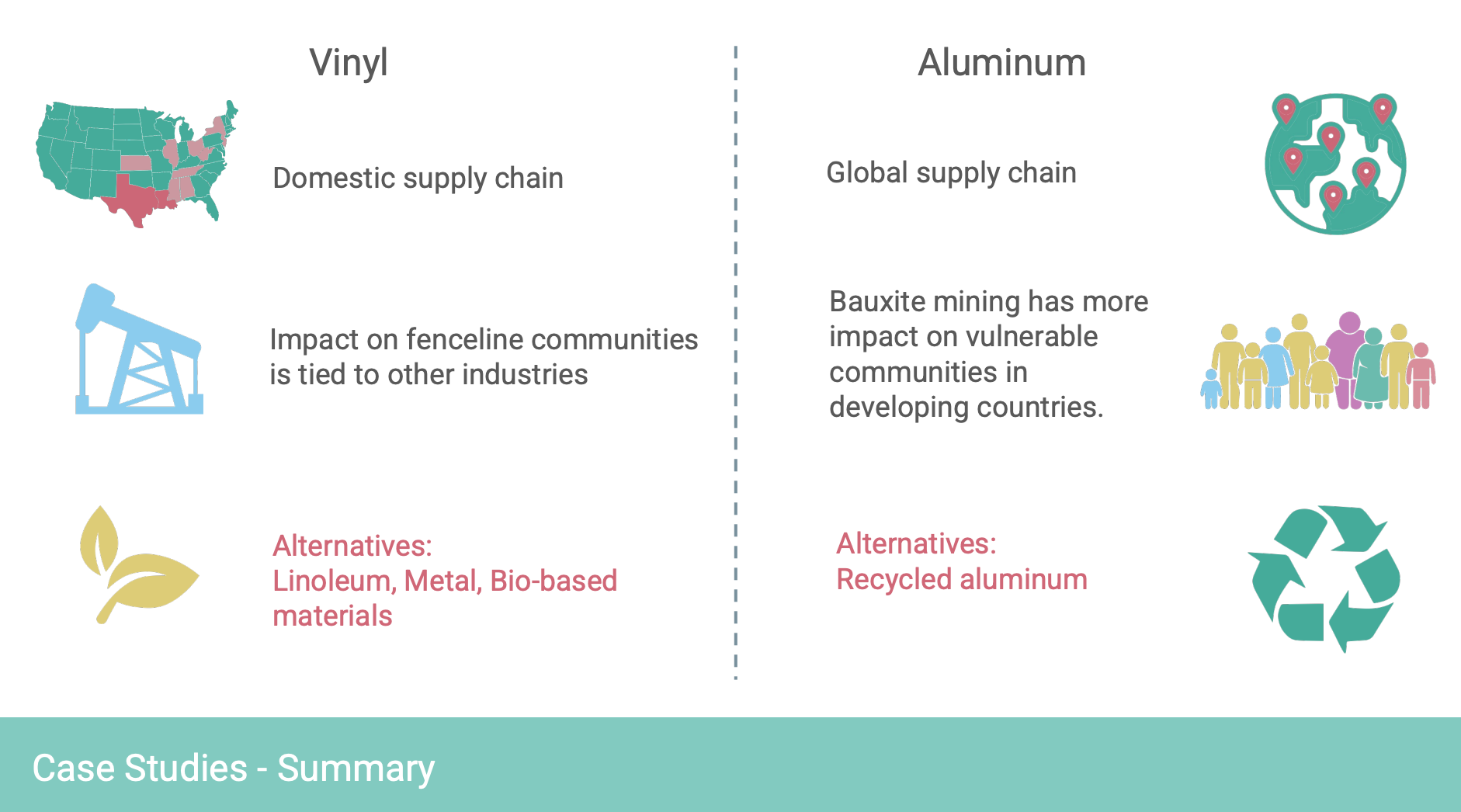
For Vinyl/PVC (widely used in flooring, siding and windows), the supply chain is primarily national, rather than global, but with a denser proportion of its polluting production located in environmental justice communities in the US South.
The aluminum supply chain extends globally - encompassing, for example, bauxite mining with local land and biodiversity impacts in Jamaica, to alumina refining in Europe. Qianyi shared the case of the Ajka alumina plant disaster in Hungary when approximately a million cubic meters of toxic red mud breached a dam and flooded seven villages.
The Intl. Federation of the Red Cross said that:
“Due to a lack of prior awareness-raising, the communities surrounding the Ajka reservoirs were unaware of the potential risks involved, nor did they understand the toxic nature of the ‘red mud’ which flooded their homes.”
That was despite the fact that many community members also worked at the plant.
Transparency and information flows need to be strengthened at all levels of the supply chain, from localized impacts to ownership structures: yet so often the incentives are for information to be withheld.
******
More stories on risks and innovation in building materials supply chains