Snug Harbor on Staten Island in NYC is a site that spreads across 83 acres, where you can find buildings that used to house ailing sailors, a memorial to 9/11, botanical gardens, and the borough’s museum. The welcome center is a small hut standing roughly in the middle. Everywhere there are the signs of love and decline that characterize public venues in need of significantly more resources. It is also the site of the Chinese Scholar’s Garden.
With access through one of the buildings on the site, the Chinese scholar’s garden is inspired by Ming Dynasty gardens (from between 1368 and 1644 AD). As the Snug Harbor website describes:
“All the [garden’s] architectural components…were fabricated in Suzhou, China, including roof and floor tiles, columns and beams, doors and windows, bridges and paving materials.
…A team of 40 Chinese artists and craftspeople spent a year in China creating the Garden’s components and another six months in Staten Island as craftsmen-in-residence at Snug Harbor to complete the construction.”
Hundreds of volunteers also contributed to the garden, which opened in 1999. One of the garden’s mosaics incorporates pieces of broken rice bowls and beer bottles which the craftspeople chose to represent China and America respectively (!).
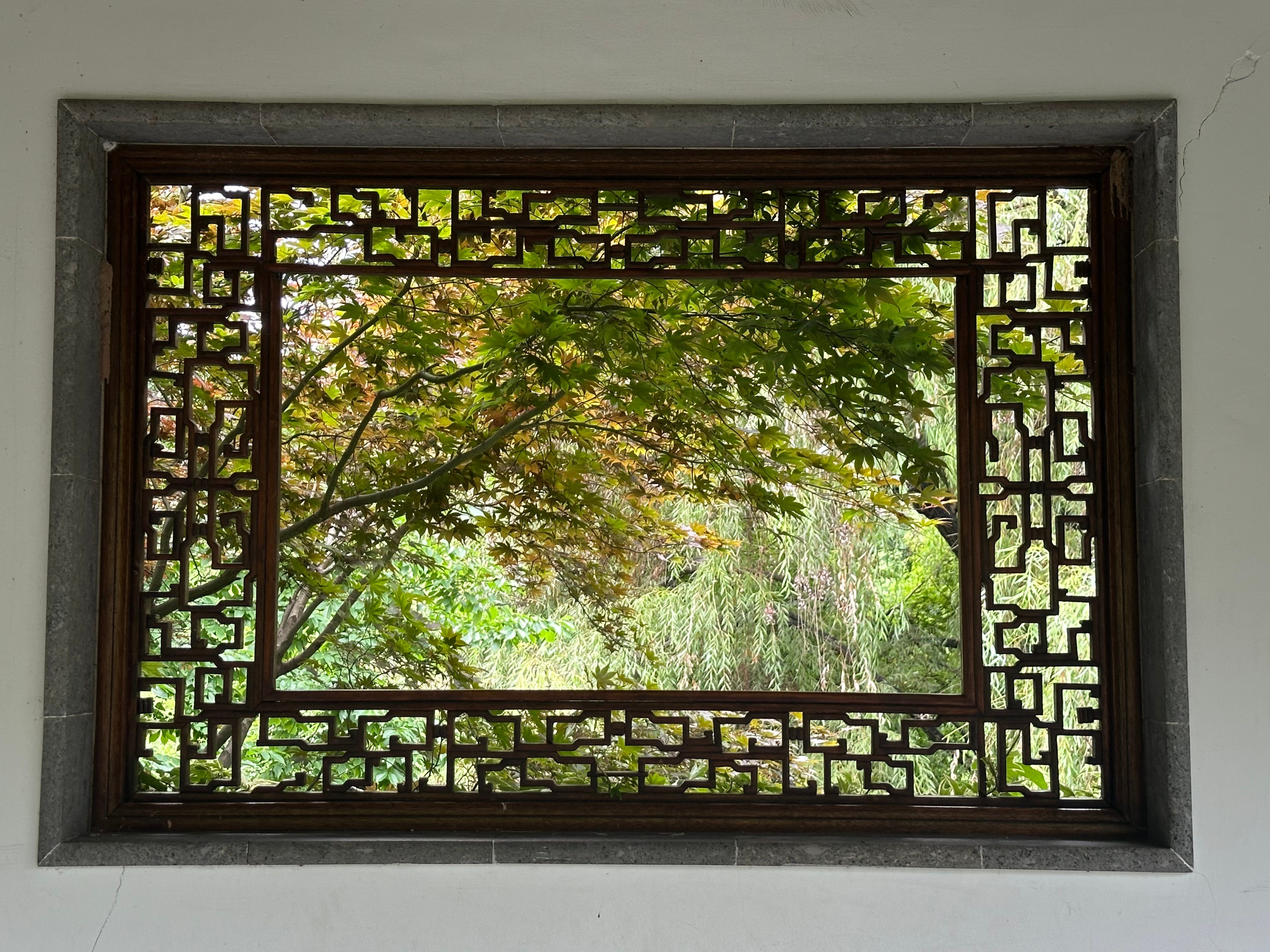
The garden’s twisting paths wrap around and through pavilions, ponds with Koi fish, and bamboo archways. An educational plaque says that while European-style gardens are designed around natural elements, such as plants, hills and water - with buildings playing an almost incidental role - in a Chinese scholar’s garden architecture is “central to the design, working in harmony with nature.”

Archways and shaped gates frame constantly changing views. And the pathways’ twists are intentional, generating different perspectives while also reflecting a belief that this would help “throw off evil spirits.”
**************************
Through 2024, It’s Material is sharing one use of the word “material” each week, on Tuesdays.