


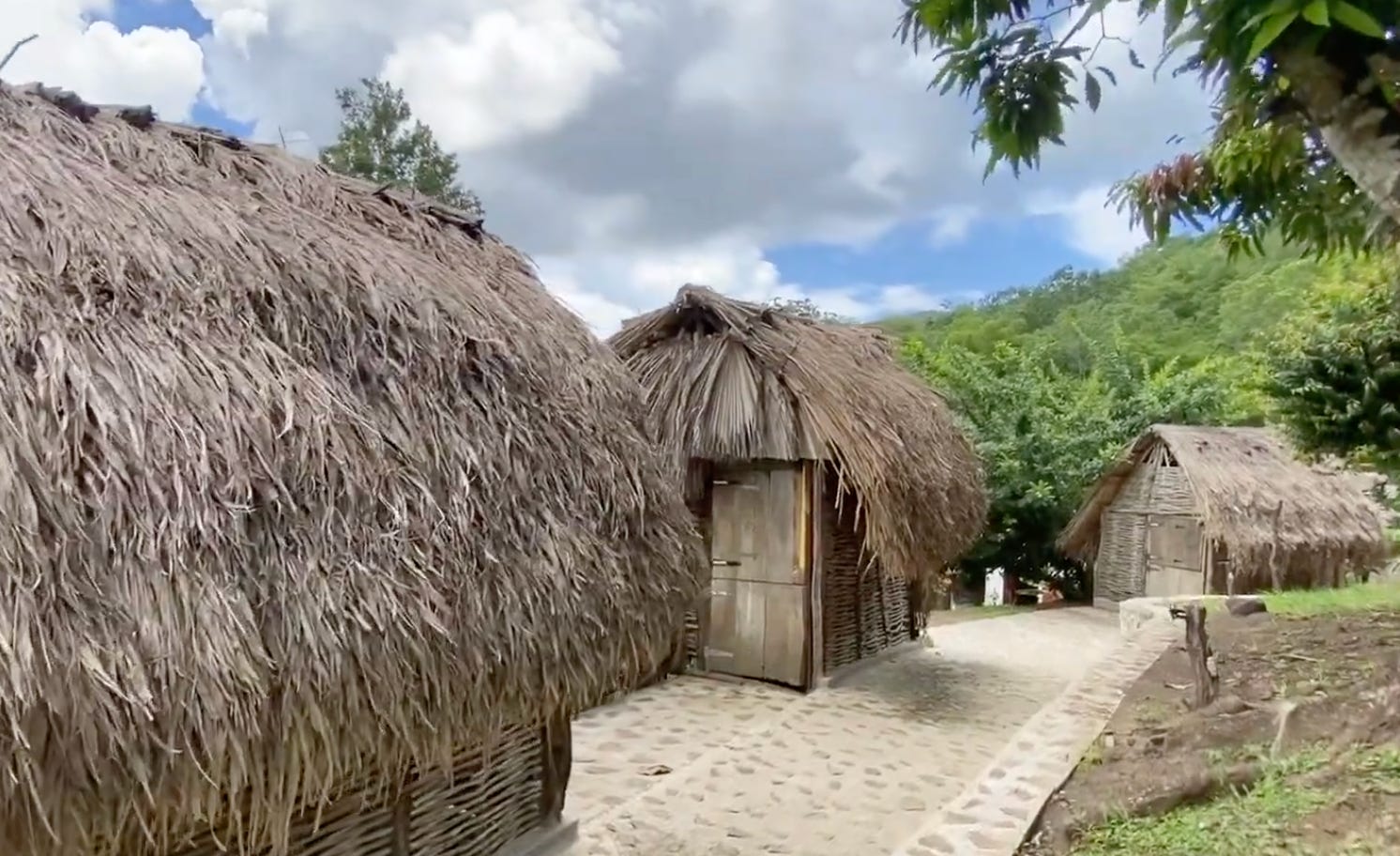
During slavery in Martinique from the early 1600s to its abolishment on May 22, 1848 slaves lived in small square shacks lined up in rows close to the plantations, containing little more than the earth floor to lie down on.
In his brilliant museum “La Savane des Esclaves”, Gilbert Larose re-creates these shacks, known as “Case-Nègres”. He shows families crammed inside, and one hut spotlights the punishments inflicted on a slave for infractions like chewing on the sugar cane they were cutting all day long.
The museum recounts the history of Martinique through its buildings, in an area of forest that Larose cleared himself, using the wood from local trees to build. In addition to the Case-Nègres, the museum has reconstructions of pre-colonization Kalinago/Carib homes, and homes that former slaves built in the hills after they were freed, surrounded by gardens of medicinal plants.
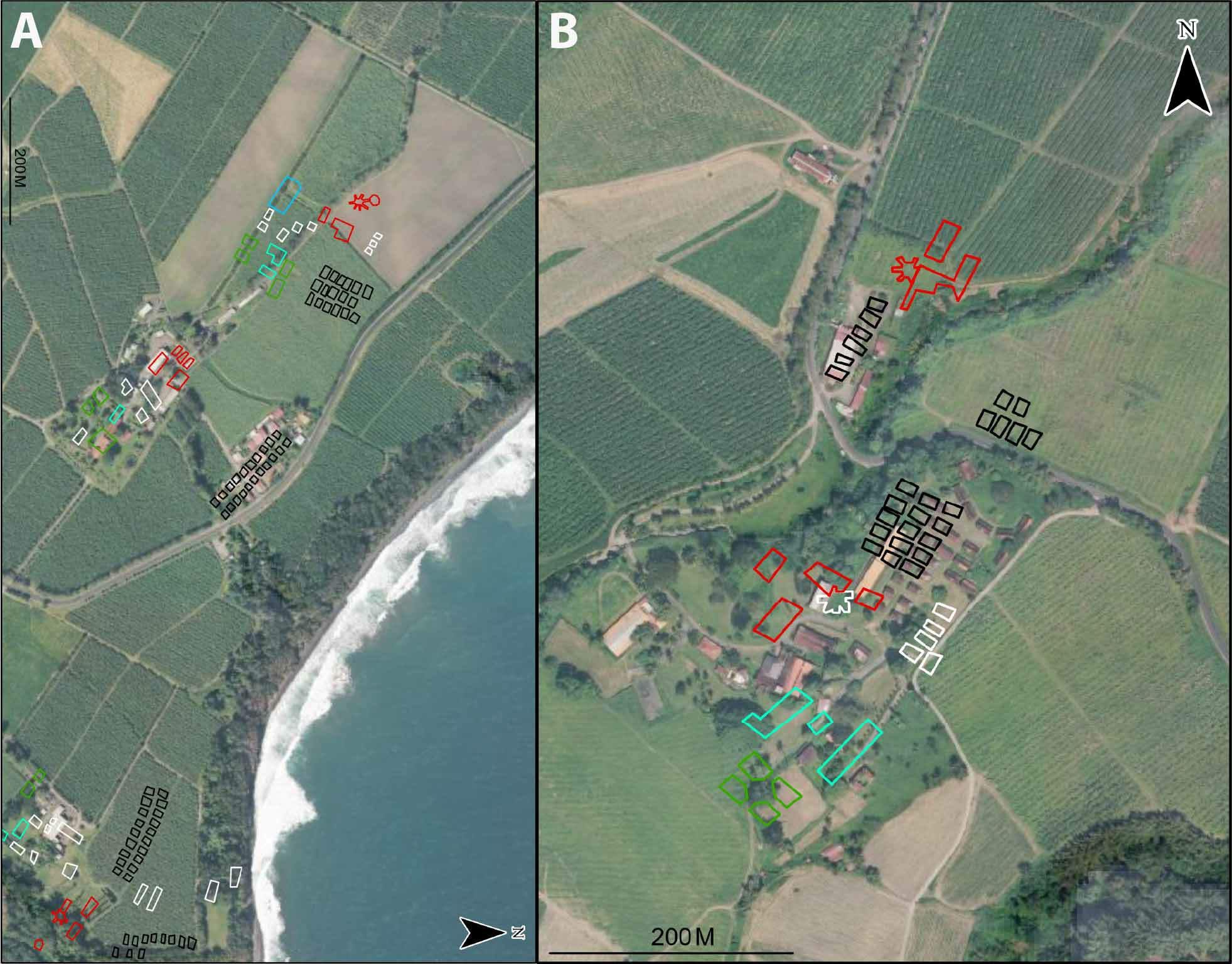
An article in the journal “ArcheoSciences” describes an effort to uncover remains of the slave quarters in Martinique, using a detailed 1770 map as a starting point. The article says that despite the quarters’ historical and memorial significance and the fact that slaves constituted most of society at the time:
The huts “have been the subject of very little archaeological research. This can be explained by the fact that archaeologists have prioritized the study of monumental remains of plantation industrial architecture over the generally invisible surface traces of servile dwellings, which were almost always constructed with perishable materials.”
Meanwhile many settlers’ homes, designed with windows and galleries positioned to maximize the benefits of circulating wind, are still standing today.
Buildings that survive and those that don’t survive contain the stories of a place and its people. It is visionary educators like Gilbert Larose who ensure that a place’s history as written in its buildings reflects its unvarnished and complete reality.
*******
Director Euzhan Palcy’s film Rue Cases-Nègres (released in English as Sugar Cane Alley) tells the story of José, a young boy growing up in a shack by a plantation in 1930s Martinique - post-slavery but still under colonial rule - and how with his intelligence, determination and the support of those around him he finds a new path forward