


During the kick-off session for a global course I’m teaching on human rights and the built environment, Luis Quintana of Todo Accesible said that “we got a man to the moon in 1969 but today I still can’t get to the 7-Eleven store around the corner from my home.”
Luis has navigated life in a wheelchair since a car accident in his 20s that injured his spine. The built environment in and around Mexico City, where he lives, is not designed for people in wheelchairs - as is the case in the majority of cities, towns and villages around the world. Nor is it designed with people in mind who have multiple other disabilities - visible and invisible. This is despite the fact that about 16% of the World’s population lives with a form of disability. Luis founded Todo Accesible to help make buildings and places more accessible for everyone.
As with so much built-environment decision-making, not designing for inclusion reflects short-term thinking and narrow definitions of value.
Multiple studies have shown that universal design at the outset of a project costs much less than making retroactive changes. And of course by not doing so, you are significantly restricting who can live in or use the place you build - whether it’s an apartment building, offices, a museum, transit system, or library.
I was amazed - though sadly not that amazed - when the Hunters Point public library here in Queens, NYC was built and opened (picking up design awards along the way) before people realized that the tiered platforms at the center of the building were inaccessible for people in wheelchairs, or for strollers. Which led to closures, long drawn-out lawsuits, and finally, costly retrofits.
Medellín, Colombia is recognized globally for its pioneering social urbanism strategy that has connected peripheral neighborhoods to the center with cable cars, and to each other with green corridors. Yet disability advocates still have to fight hard for improved access. Luz Amparo Sánchez of the community development organization Corporación Región talks about the importance of working in close partnership with disability justice groups, like Fuerza Incluyente.
“Together, we understood the right to the city as a right to live, to occupy, to transform, to enjoy the city…”
“Conjuntamente hemos entendido este derecho a la ciudad como derecho a vivir, a ocupar, a transformar, a disfrutar la ciudad.”
The idea of together - the simple fact that designing inclusively means that people can be together - is echoed by Jordan Whitewood-Neal of the DisOrdinary Architecture Project in the UK.
Interpreting the phrase “in common” for a festival of that name, he says it “is also asking where we have in common. Which I think is an incredibly important question because it addresses the spaces that we can both inhabit and use together, or can’t use together”.
Questions of disability, ability and access extend to the mind as well as the body.
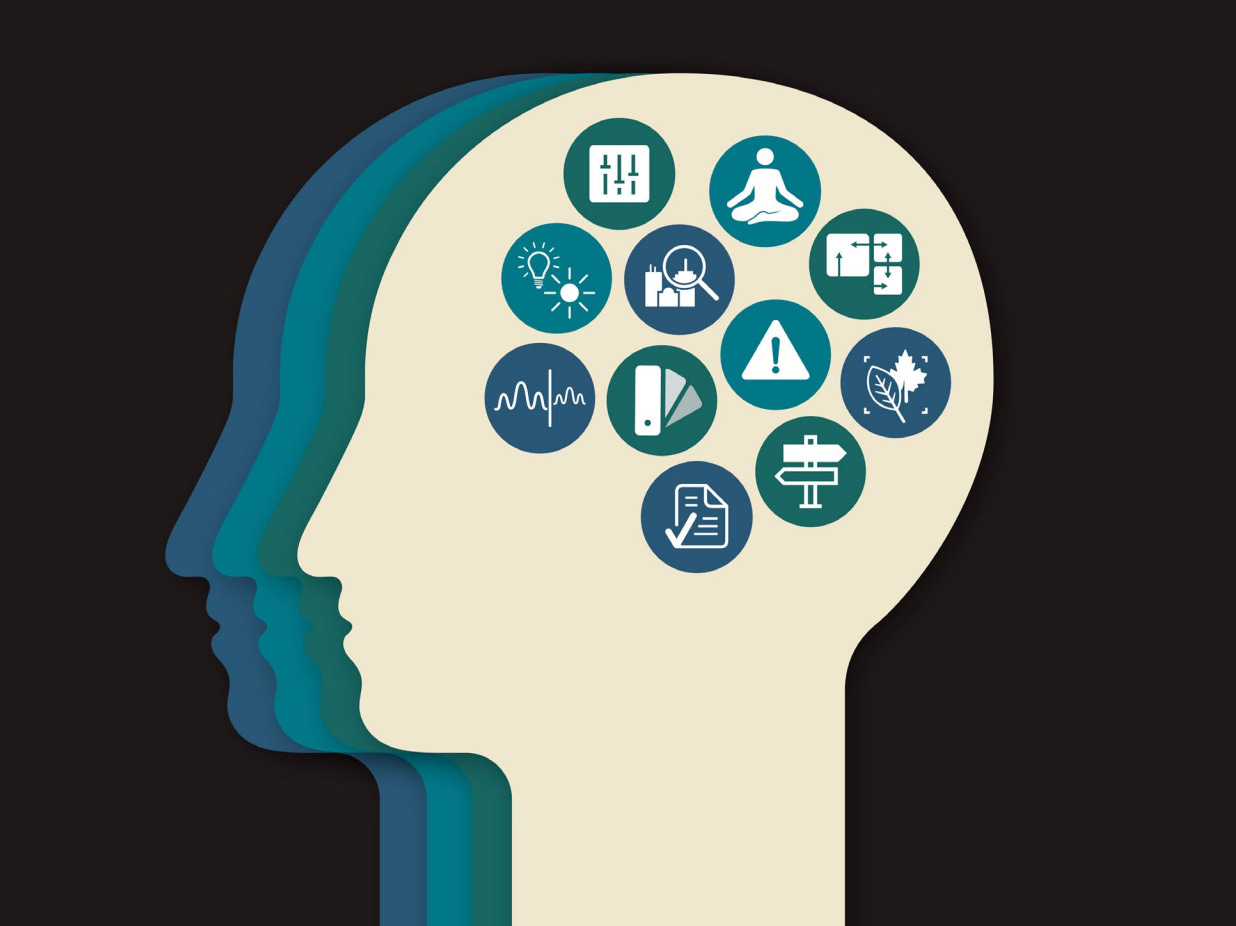
Also in the UK, the British Standards Institute has issued a “publicly available specification” (PAS) called “Design for the mind – Neurodiversity and the built environment”. It is believed to be the first standard developed by a national standards body that “provides built environment guidance for multiple sensory processing differences and conditions.”
Covering elements like lighting, acoustics, layout, way-finding and other sensory design considerations the guidance takes into account the interplay between our experience of the built environments and our minds.
During the session with Luis Quintana one of the participants wondered why, when both the moral and business case are clear, projects often overlook disability.
Great question. I think it gets to the heart of siloed and short-term decision-making. Siloed, given the disparate motivations of people investing in, owning, designing and building places, across which end-users in all their diversity are often not represented. And short-term, in that the extended life-span of a project and the multiple economic (and social, environmental) knock-on effects of building thoughtfully are not factored into the costs of getting the project built.
Building “together” might feel like extra work for those who want to complete a project and get on to the next. But done right it saves time and money, generates inspirational points of connection and leads to a better experience for everyone.
Thoughtful, well-researched piece, and strong conclusion.