



One of the motivations of Ilija Srdanović to join the “Student List” movement in Serbia, which won the election last week and put an end to rule of strongman Vučić, was the collapse of a renovated train station canopy.
The collapse at Novi Sad station skilled 16 people. Allegations of corruption and lax oversight in the awarding of public contracts meant the disaster became a symbol of Vučić’s 14-years in power. Srdanović is now a strong contender for Prime Minister.
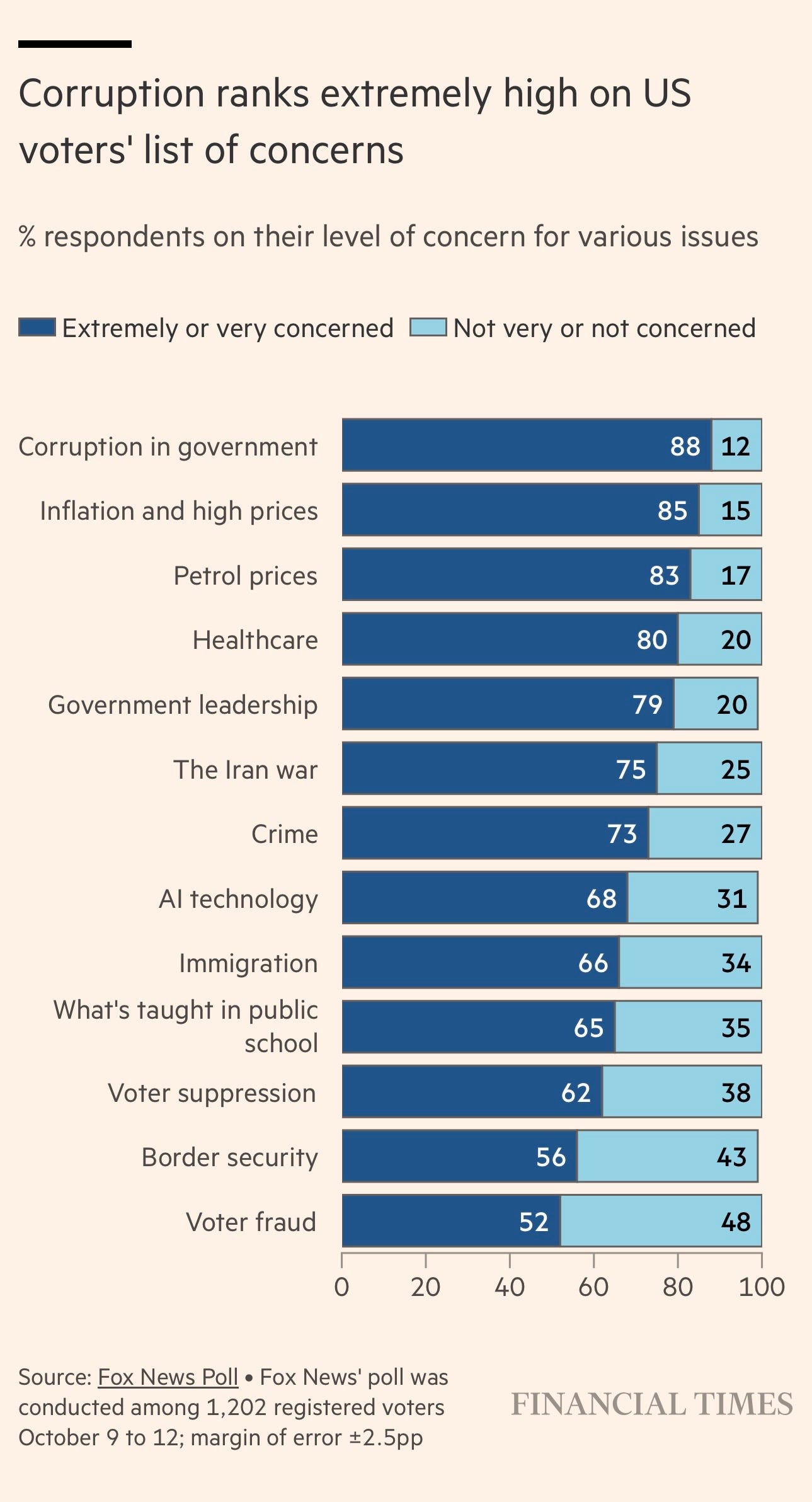
Meanwhile here in the US where I’m based, corruption is at the forefront of voters’ minds as we head into the 2026 midterms:
So it felt timely that last week’s session of the Dignity by Design course focused on integrity and anti-corruption in building and infrastructure.
Strengthening integrity in built environment processes can ensure that: in the first place, what gets built meets actual needs of local populations - rather than serving as cash cows or exclusive vanity projects; that structures are sound - reducing the risks of deadly collapses, fires and other hazards; and that the related business ecosystem - in construction, operations, and through supply chains - is one that expands rather than stifles opportunity.
I kicked off with three illustrative examples of the harms of construction-related corruption, which can range from the locally-specific to the geopolitical level:
The bribery by Brazilian conglomerate Odebrecht, which had ripple effects throughout Latin America and lead to the toppling of governments
The fact that the death toll from the 2023 earthquake in Turkey was far higher than it would have been, because builders had paid politicians to overlook building code enforcement, while the government itself was willing to cut corners as it promoted a rapid building boom
And the “kids for cash” scandal in Pennsylvania, in which the developer and the co-owner of juvenile detention centers bribed judges to give juveniles harsher sentences.
The guest faculty for the session was Nicolas Ronderos of CoST (the Infrastructure Transparency Initiative), who led an excellent practical deep-dive on strengthening integrity in the built environment, including a case study focused on data center siting and construction.
Nicholas touched on the characteristics of the built environment that make integrity issues so pervasive and challenging.
For example, it’s fixed in place (so that land, location, and zoning approvals create unique bargaining points); long and complex (with planning, finance, design, construction and operations spanning many years); there are many gatekeepers (with complex interactions between, for example, utilities, permitting bodies, investors, contractors and communities); and consequences endure (so that poor choices in the early stages lock in social, environmental and financial costs). Different building structures, whether hospitals, housing, airports or data centers, have their own specific risks.
Nicholas emphasized that both preventative anti-corruption measures are needed, as well as proactive measures to strengthen integrity.
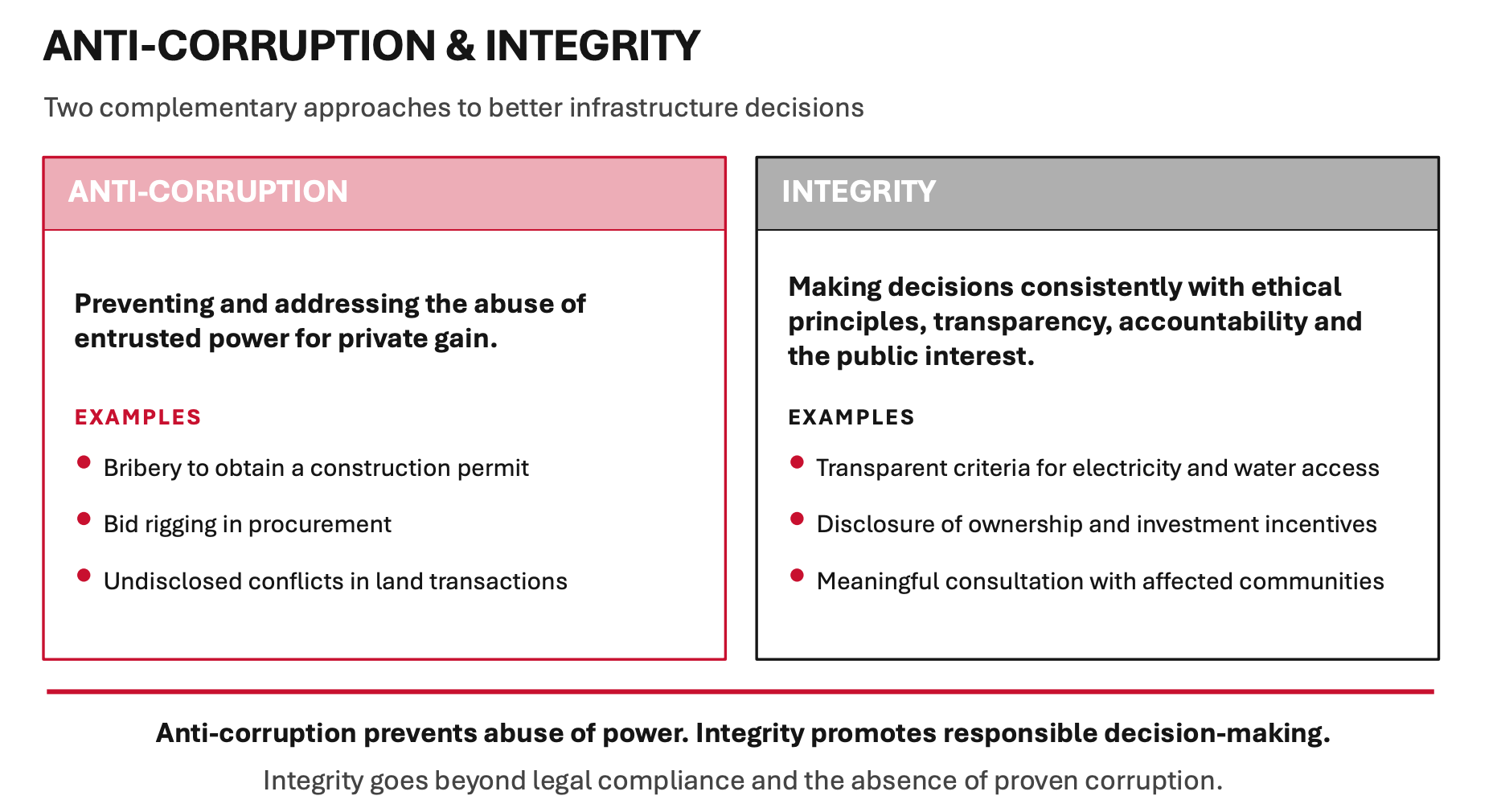
He spoke about the growing momentum to trace “beneficial owners” in the built environment, as a prerequisite to accountability.
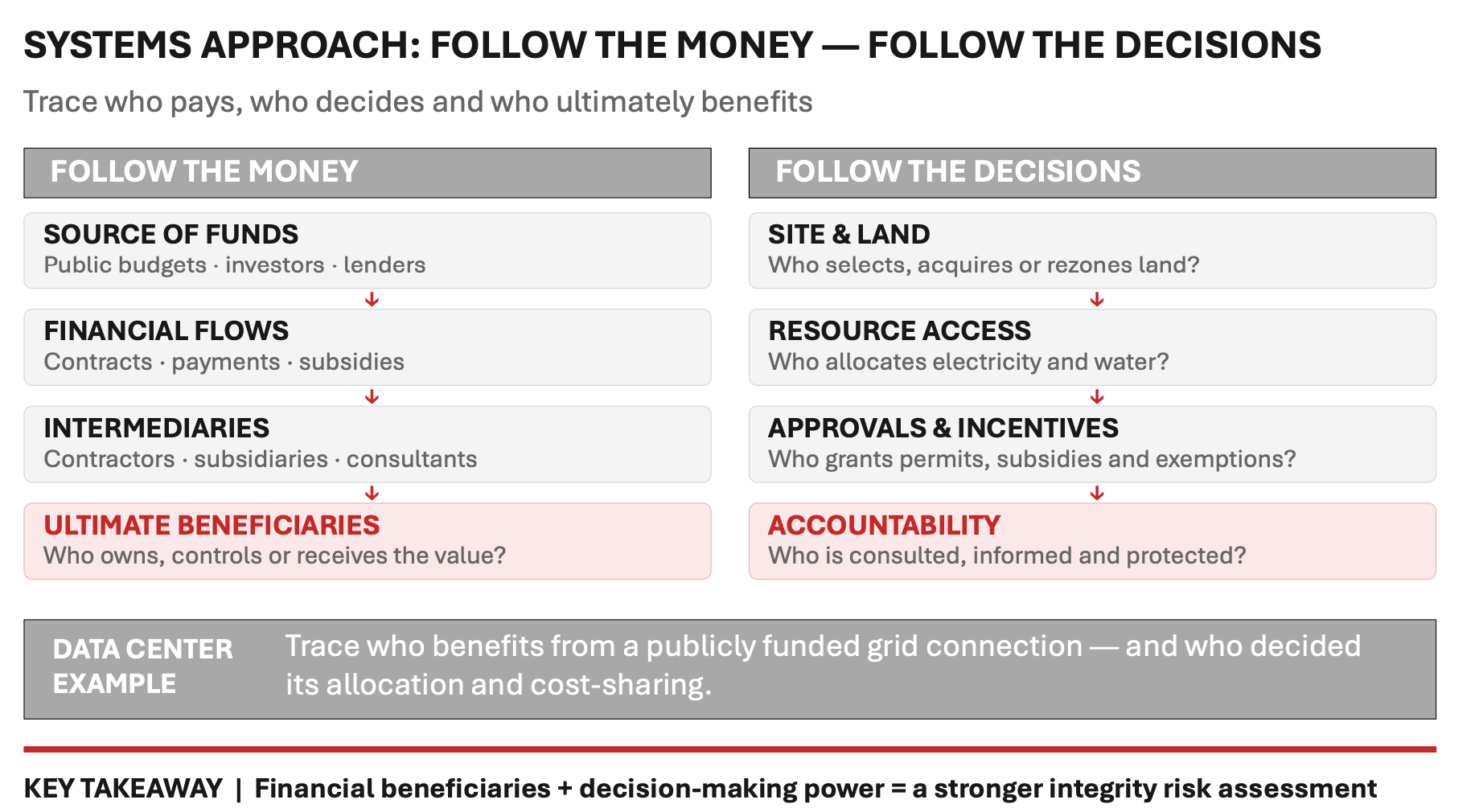
Nicolas also emphasized the importance of collective action, between government, investors, developers, utilities, and communities, to shift the incentives.
Despite the entrenched nature of vested interests in building, around the world the intrepid, sometimes life-threatening, and creative work of making building work better for people is underway: from transparency advocacy, to investigative journalism, to social and political movements, to those bringing decision-makers together on the basis that in the long run integrity in the built environment makes sense - for residents, for investors, and governments.