


Needless to say, my “Climate Week” NYC focused on building - literally - and on the stories we tell…
Living here in New York I didn’t have far to travel to participate, hitting up sessions in between other commitments. But in this world of closing borders and rising fear I was more aware than ever that the opportunity to move from place to place and connect with people from multiple countries is something to be deeply appreciated, and respected.
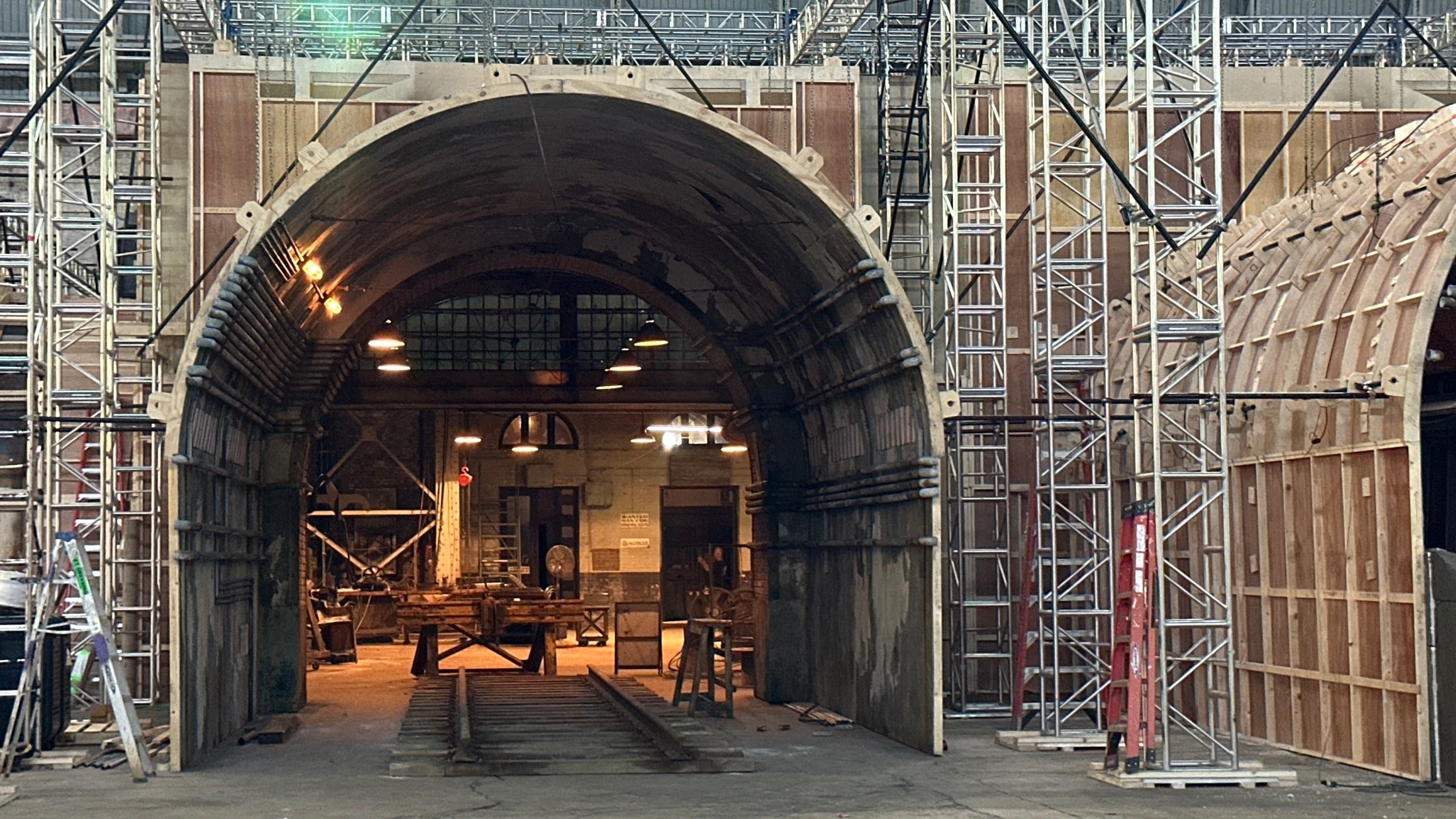
I kicked off the week with an NYC “Film Green” session on Sustainability and Circularity on Set - part of the Climate Film Festival.
Think of any films or series that you’ve seen, and the sets that bring them to life - each one involving construction and materials that often end up in landfill.
A production in NYC sends around sixty dumpsters of materials to landfill - lumber, furniture, appliances, clothing - piling up through multiple productions to around 20,000 tonnes each year.
Through this specific lens of film sets, the perennial obstacles that surface time and again in construction processes came up:
Time and budget constraints, and the need to make project economics work for sustainability and vice versa
Silos between departments and decision-makers
And the power of thinking about the whole lifecycle of a project right from the outset (something I keep coming back to!)
Participants were all finding ways to innovate in their ecosystem.
For example, Anu Schwartz of IATSE’s local 829 (theatrical employees’ union) advocates for ground-up approaches - thinking carefully about which materials are selected from the outset - and tries to instill a culture of sustainability across set crews.
Local 829, together with photographers’ Local 600, organized a resolution that was adopted at the union federation’s quadrennial in Hawaii this Summer, which calls on:
“every Local Union to do their part, with industry partners on behalf of the health and safety of our crews, by endorsing and encouraging carbon-neutral productions and working to establish best practices that reduce waste on every set, stage, and shop.”
Read the full resolution here.
Emellie O’Brien of Earth Angel (“making movies without making a mess”) gathers the data to support films’ sustainability journeys. She emphasized that waste removal costs like transporting and tipping are expensive, so with good pre-planning reducing waste can dramatically save costs.
Philippa Culpepper, a set decorator (“arguably the largest consumers on set”), is raising awareness among an East Coast group of the Set Decorators Society of America about the whys and hows of reducing sets’ climate footprints.
And producer Amanda Jabes said that a set feature or prop doesn’t have to sit in a storage unit creating dust when it could have a second life on another set. She provided the the very practical example of how she re-used the staircase from Logan Roy’s apartment in Succession for a very different Gotham-context in Penguin.
*********

The German Green Building Council (DGNB) and the American Institute of Architects hosted an event for DGNB’s new collaborative project called “SHIFT”.
SHIFT recognizes the limitations of identikit “green” buildings. (Put “green buildings” into Google and you’ll get a swathe of them). And of what it describes as five “principles of failure” of modern architecture: i. Uniform architecture ii. Resource ignorance iii. Short-term responsibility iv. Car-centric urbanism, and v. Social ignorance. It’s gathering examples of inspirational architecture that offer a better way forward, drawing on practices already underway around the world.
*********
Football for Future brought an awesome group together for the launch of “Pitches in Peril”. The report shines a light on how the world of football from the grassroots to mega events is threatened by growing climate impacts, while acknowledging that mega events contribute a lot of emissions themselves.
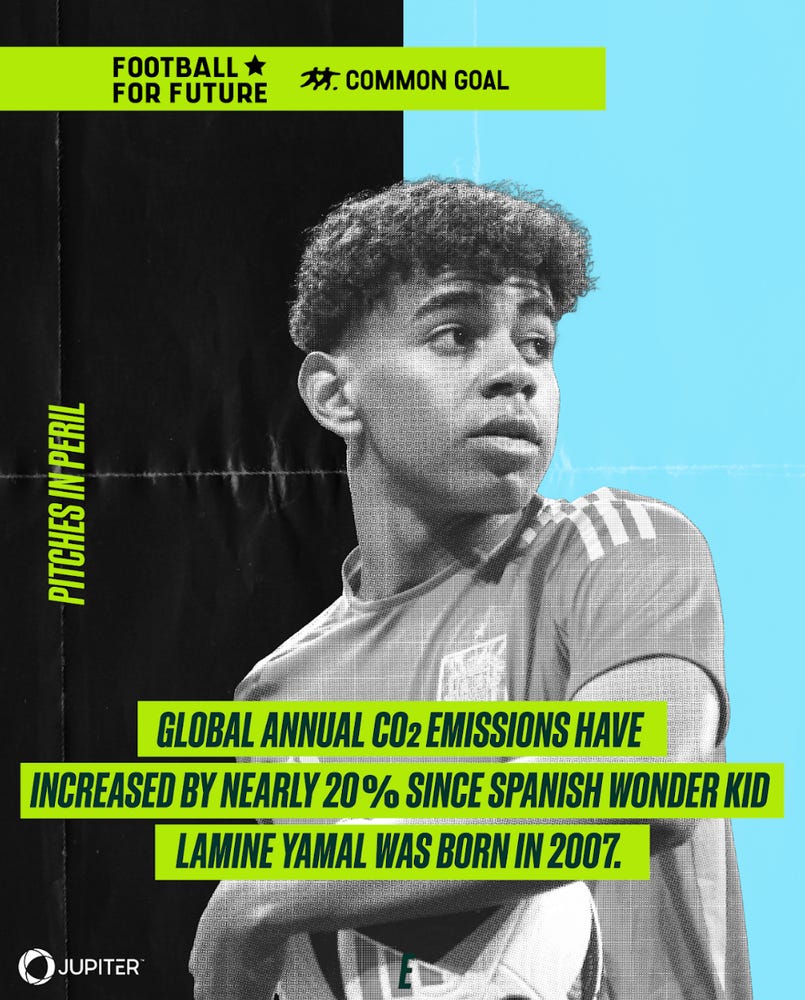
It found, for example, that two thirds of the grassroots pitches where football legends like Messi, Salah, and Troost-Ekong learned to play will face unsafe or unplayable heat conditions by 2050. And that most of the stadiums hosting the 2026 World Cup have already had days when they have exceeded safe-play thresholds as a result of climate hazards - with the most climate-vulnerable being those in Miami, Houston, Monterrey, and Dallas.
The report calls for reimagining sports infrastructure and activating players and fans around climate. Real climate action, it says, will mean bringing “adaptation, imagination and equity to the the heart of the game”.
Once again - as with the teens I’m working with on Generation 2026: Youth Media Forward - I was reminded of the enormous risks and possibilities posed by the upcoming 48-nation World Cup.
*********
Over at the Climate Film Festival’s Narrative Change Summit a panel of funders shared their work supporting shifts in narrative to drive climate action. I was glad that a spotlight on real estate came up - even though it wasn’t framed as such.
Real estate is still way too under-looked when it comes to climate impacts, given it accounts for sixty percent of the world’s assets and has a mega planetary footprint, while also intersecting with the fundamental reality of who has a decent place to live, and who doesn’t.
One of the highlighted impact films was Raising Liberty Square, which tells the story of climate gentrification in Miami. Developers that traditionally built along the coastline have moved inland to higher ground, razing a public housing project for a new mixed-use development.
“Miami is ground zero for sea level rise,” says one of the residents. “When I was a child my grandfather always would say, they are going to come take Liberty City because we don’t flood.”
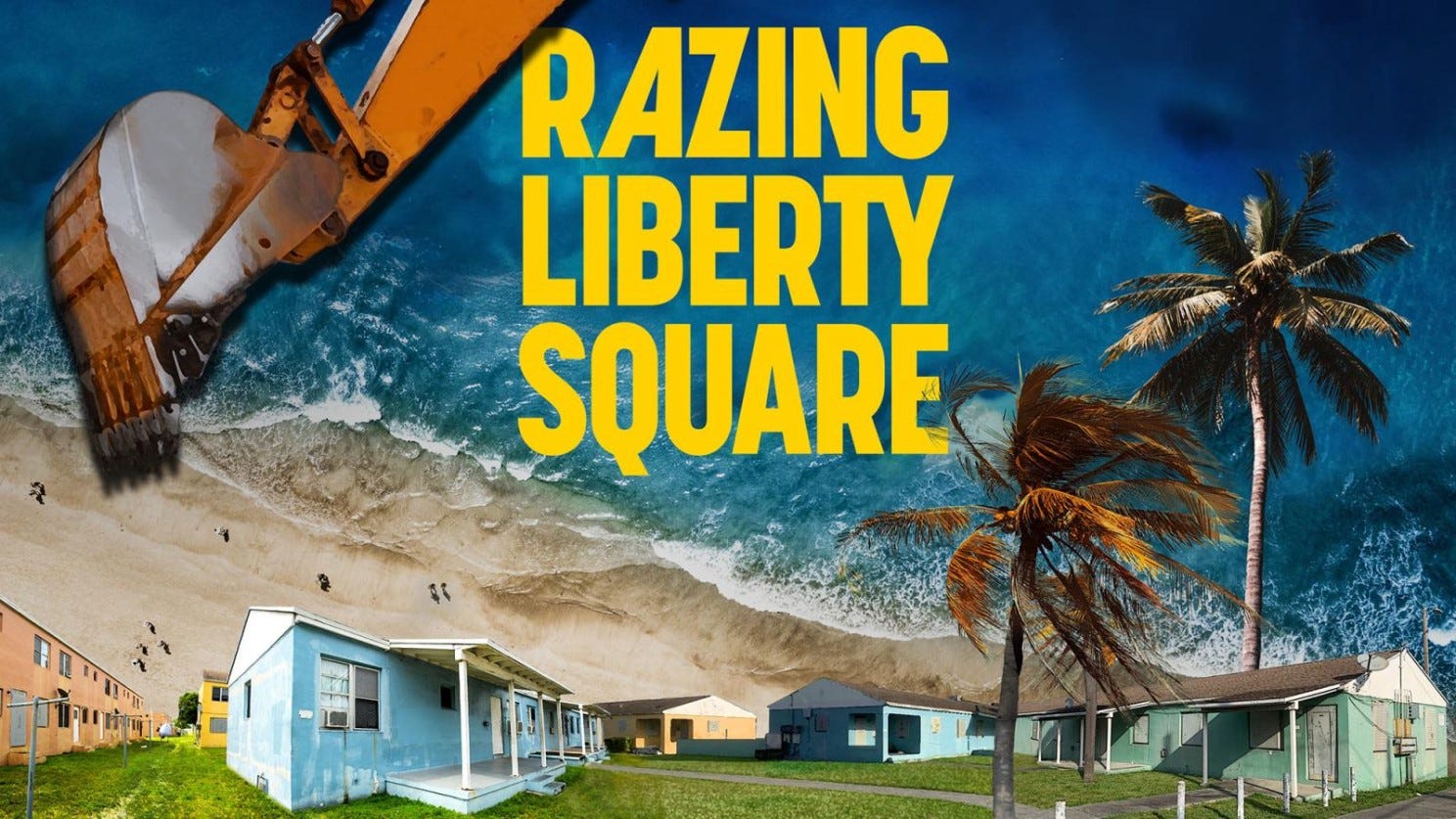
As the film’s website puts it:
“The dramatic changes happening in Miami’s Liberty Square are a looking glass for contemporary issues of wide-scale significance: the affordable housing crisis, the impact of systemic racism and climate gentrification. Miami is experiencing sea level rise before the rest of the country. What is happening in Liberty Square is a prescient story of what is to come, and strategies put to the test here are being closely observed by the rest of the world.”
It’s prescient of what is going to scale - and it’s also an expansion of cycles of displacement that communities around the world have faced in the name of climate-related development and redevelopment, from Lagos to New Orleans. As climate change intensifies, questions of what gets built, where and how will determine how just or unjust a future emerges.
*********
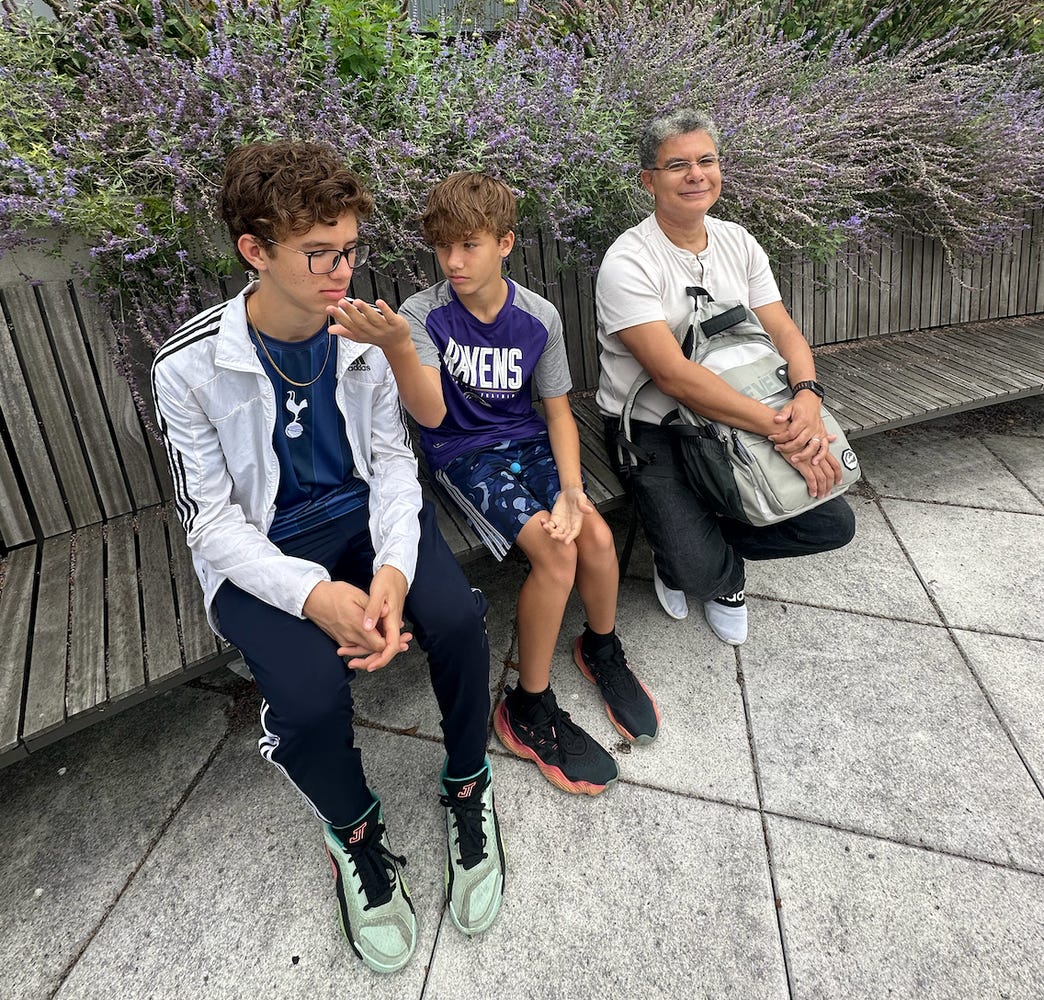
NYC schools were closed on Wednesday so I brought my family to the roof of the Javits Center (on what’s come to be recognized as my occasional - or in their minds perhaps not occasional enough - built environment-related excursion).
The huge convention center had previously gained a reputation as the “Darth Vader” building, for its swathes of dark glass that killed multiple birds as they migrated along the Hudson River.
NYC Bird Alliance ran a tour describing how the Javits Center has worked to turn that reputation on its head - installing bird-proof glass and a green rooftop covered with grass, an orchard and a farm.
The surrounding gleaming towers of Hudson Yards (without bird-proof glass) and the scale of the convention center itself (all that cooling required for empty air) caveated the transformation for me, but did create a sense of possibility.
What if the most is made of cities’ rooftops - including expansive warehouse roofs - for cooling vegetation, energy generation, habitats, play space, whatever makes most sense in a particular context?
What if we respect the materials that form a city’s built environment - and the labor that goes into them - and dramatically reduce and reuse construction and demolition waste in creative ways. (In NYC for example, this waste is 60% of the city’s waste stream).
And what if we could move to a process of building that always questions the purpose of new builds, how that purpose may be achieved differently, and who (including migratory birds) may be impacted?