


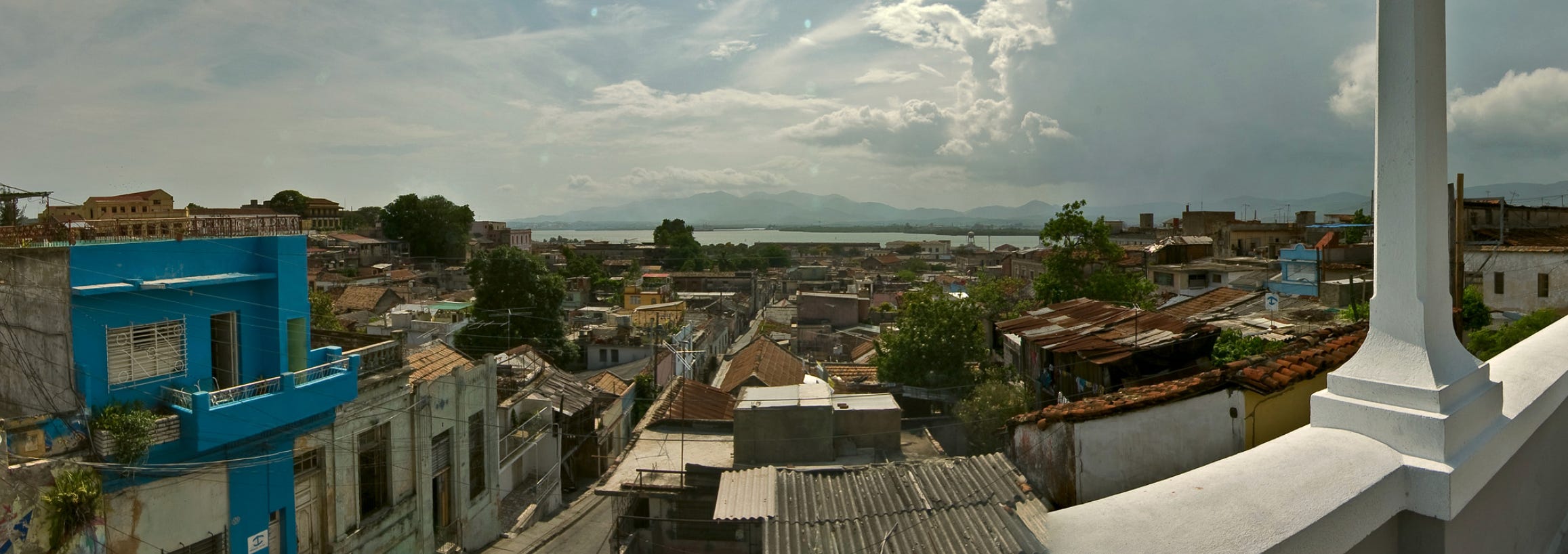

Through 2026, It’s Material is sharing examples of building(s) in lyrics, a kind of “acupuncture of meaning” to explore the back-and-forth connection between building/s and our lives.
This week, a lyric from Compay Segundo’s Balcón de Santiago, a classic example of Cuban son (Cuban bolero-son to be precise).
“Cuando yo llegue a mi Oriente querido
Cuando yo asome al balcón de la capital
Cuando yo sienta sonar las campanas de la catedral
Doy un salto de alegría y les digo a los viajeros
Estamo’ en Santiago
Como custodia dejo atrás la Virgen de la Caridad
La que me vio partir, la que me vio llegarYa te diré, te diré mis penas
Ya te contaré, te contaré mis alegrías
Cuando yo me vaya te diré adiós, adiós
Virgen mía….”
“When I reach my beloved East
When I appear on the capital’s balcony
When I hear the cathedral bells ring
I’ll leap for joy and tell the travelers
We’re in Santiago
As my guardian, I leave behind the Our Lady of Charity
She who saw me depart, she who saw me arriveI’ll tell you, I’ll tell you my sorrows
I’ll tell you, I’ll tell you my joys
When I leave, I’ll say goodbye, goodbye
My Virgin….”
He’s singing of Santiago de Cuba, in the East of the island. The Virgen de la Caridad is a patron saint of the country. And Santiago is known for its balconies. Balconies may be simple structures but they brim with emotional connotations (as do benches, from a previous post). They bridge the inside and the out, create viewpoints for comings and goings, vantage points over horizons.
Santiago and the East of Cuba is also where Cuban son originated, before the music was carried across the whole island and became part of its identity. It emerged through the creolization of African and European rhythms, singing styles and instruments. Last December, Cuban son was officially added to UNESCO’s “list of the intangible cultural heritage of humanity" (it’s quite a process to get on that list).
Cuba’s being squeezed like never before by the US, with a new blockade of oil from Venezuela and stronger currency restrictions on top of existing sanctions. Fuel is hard to come by, garbage is piling up as a result, what was left of the economy is at breaking point and its future is uncertain.
I’ve been taking inspiration recently (very much on the lookout for inspiration!) from Eduard Glissant’s “Traité du tout-monde” / “Treaty on the whole-world”. From the Caribbean Island of Martinique, Glissant saw the world through an archipelagic lens, sea-beds forming a continuous connection, single-identity-definitions being meaningless and all existing “in relation.”
He foresaw that “regions of the world [would] become islands, isthmuses, peninsulas, lands thrusting out, mixing and connecting and yet which endure.”
*****
Also check out:
“No water or electricity, and children begging in streets filled with rubbish – but this is why I won’t leave Cuba / Whether you blame the US or the communist regime, there is no doubt that this is an island spiralling into tragedy” by Ruardih Nicol in the Guardian
And for Spanish speakers, Leonardo Padura’s latest novel Morir en la Arena is an astonishing portrait of the last 50 years of the country, told through the lens of one family, their friends, and a patricide