


I was going to include a subtitle for this post - “acquisition, ownership, stewardship” - but even with the inclusion of the gentler term stewardship it just didn’t look or feel right, squeezing the expansive reality of land into those process-oriented terms. (This newsletter’s tagline is “Buildings, language and both”, so that’s what you get!).
Last week’s third session in the global Dignity by Design course focused on land, and the human and environmental rights tied up in how it is used and developed.
In 2020, the Rio Tinto mining company, with legal permission, blasted two ancient rock shelters at the Juukan Gorge in Western Australia which were of major cultural significance to the Puutu Kunti Kurrama and Pinikura/Binigura peoples. Artifacts and remains in the area that spanned back over 46,000 years were gone in instants.
Juukan descendent Mr Burchell Hayes described in Parliamentary testimony how the gorge:
“…is known to be a place where the spirits of our relatives who have passed away, even recently, have come to rest. It is a place that the very, very old people still occupy…It is in the ancient blood of our people and contains their DNA. It houses history and the spirits of ancestors and it anchors the people to this country.”
The implications of the blasts reverberated in Australia, around the World, and up to the highest levels of Rio Tinto, leading to the resignation of the CEO and other senior executives.
I happen to be reading the novel Land by Maggie O’Farrell at the moment. Set in Ireland, it revolves around the “colossal lifespan of a landscape”. Not all instances of land ownership changes, development and use come directly up against colossal timespans of tens of thousands of years. But they always have an effect on past, even recent past, uses and values; on the situation of people and wildlife in the present; and on the future being opened up - with its pathways and possibilities opened or closed (building decisions have implications that shape the future in profound ways).
The economic drivers of development and pressure for return maximization mean that so often these wider time frames aren’t taken into account. But there is so much to gain (and harm to be averted) from big and even small shifts in how a place’s past, present and future are taken into account.
The two faculty for this session were Chris Jochnick, CEO of Landesa and Ankit Bhatia, a land economist with the Mercatus Center.
Chris shared that when he arrived at Landesa he realized how his previous trajectory and work - as a corporate attorney, then as a human rights advocate working in the Amazon rainforest, and then with Oxfam - had been inextricably tied up with land despite that not being foregrounded at the time.
Chris honed in on the risks communities face from the power imbalances that arise from land tenure insecurity (1.1 billion people fear loosing their land or property rights). On the risks for investors of not taking land issues seriously, from transaction costs, to project risks, to reputation and legal risks. And he framed three scales at which land risks arise: industries with large land footprints (from urban development to energy, infrastructure and forestry); areas with competing claims where rapid land acquisition and concentrated development occur; and land risks through company supply chains.
Ankit focused on the specific context of India. He described how a “pancake” trajectory to urban development has opened up space for millions to make their lives in cities yet without the infrastructure to support those dwellings, which more condensed development would have allowed. And he lifted up the trade-offs in who gets to shape and benefit from new visions for condensed development. (For two very different takes on Adani Group’s redevelopment of the Dharavi informal settlement in Mumbai, for example, check out here and here).
The discussion distilled two tracks to approaching the human rights dimensions of land: steps to minimize harm and generate social benefits within mainstream economic models of development; and ancient but also innovative and currently scaling (in pockets) approaches to co-ownership and benefit distribution, from Canada to New Zealand and beyond.
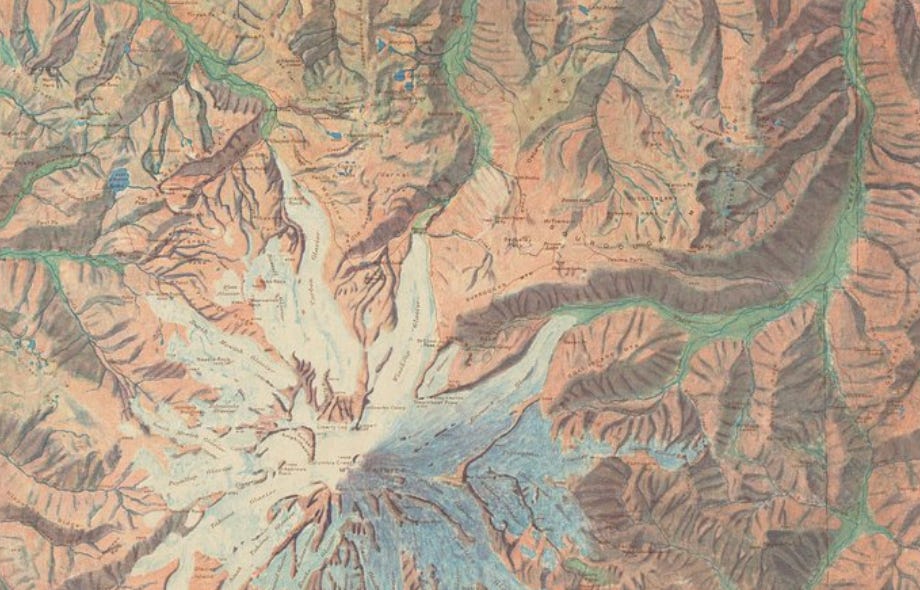
In Farrell’s Land, the central character Tomás has been employed by the redcoats of the British Army Ordinance Survey to map a peninsula, when he has an epiphany.
“My point is, my point is, my point is…that there needs to be a map of how this land really is, of how it has always been, of what lies beneath whatever order or disorder others might impose upon it. There must be a way to create such a document. And to do so would be an act of honour. Honour and resistance. The whole matter rests in our hands, do you see?”
*******
Related posts: